Telematics is a valuable tool when contractors have a clear use for the data. Automatic location data, hour readings, fault codes, idle time, and other machine information can help teams manage high-value equipment, stay ahead of maintenance, and understand how machines are being used.
At Terra Engineering & Construction, based in Madison, Wisconsin, that value was weighed against a simpler operating need: keeping equipment locations, maintenance needs, and field-reported issues current without outfitting every machine with telematics.
Some of Terra’s fleet includes built-in telematics, and Vice President of Operations Seth Zimmerman is not opposed to using it in the future as more machines come equipped with it. For Terra’s day-to-day operation, though, telematics has not been the first priority.
Terra chose to address its immediate equipment tracking and maintenance needs first, with a system that could also support more machine data later if telematics became a bigger priority. The company’s bigger need was knowing where equipment was located, what maintenance was coming up, and what needed attention from the shop or field. That information needed to be easy to find, easy to update, and useful to the people making daily equipment decisions.
Terra found that it could stay organized, keep equipment information current, and manage day-to-day equipment decisions in IVO Systems without making a major telematics investment across the fleet.
“We have older equipment, and it would be a huge investment to get telematics installed in every piece of equipment we have,” Zimmerman said.
For Terra, that investment has not been necessary to solve the problems the team actually needed to address.

The information Terra needed most
Terra’s operation depends on keeping equipment, people, and maintenance information coordinated across the office, field, and shop. Before implementing IVO Systems, much of that coordination lived in spreadsheets, emails, paper maintenance cards, and conversations between team members.
Those processes had worked for years, but as Terra grew, they became harder to maintain. Equipment maintenance was one of the clearest examples. Repair cards, maintenance cards, and service cards had to be filled out, collected, reviewed, and entered before the shop had a current picture of what needed attention.
By the time that information made it through the process, maintenance could already be behind.
The move to IVO gave Terra a faster way to keep equipment information current. Rather than relying on a delayed paper trail, the team can see where equipment is and where it's headed next, review maintenance information, and act on issues as they come in.
That is the kind of visibility Zimmerman values most.
“I honestly have ScheduleVO, TrackVO, and MaintainVO all as separate tabs on my computer,” Zimmerman said in Terra’s case study. “I like to be able to see where something’s at, but then bring up the maintenance of a couple pieces of equipment that are on that job and evaluate it.”
That statement says a lot about Terra’s approach. Zimmerman wants the essential information close at hand: where the equipment is, how it is moving, what maintenance is coming up, and what issues need attention before the next decision is made.
Why telematics is lower on the priority list for Terra
Zimmerman described telematics as “on the lower end of importance” for Terra, largely because the team has been able to stay organized without relying heavily on automatic location data.
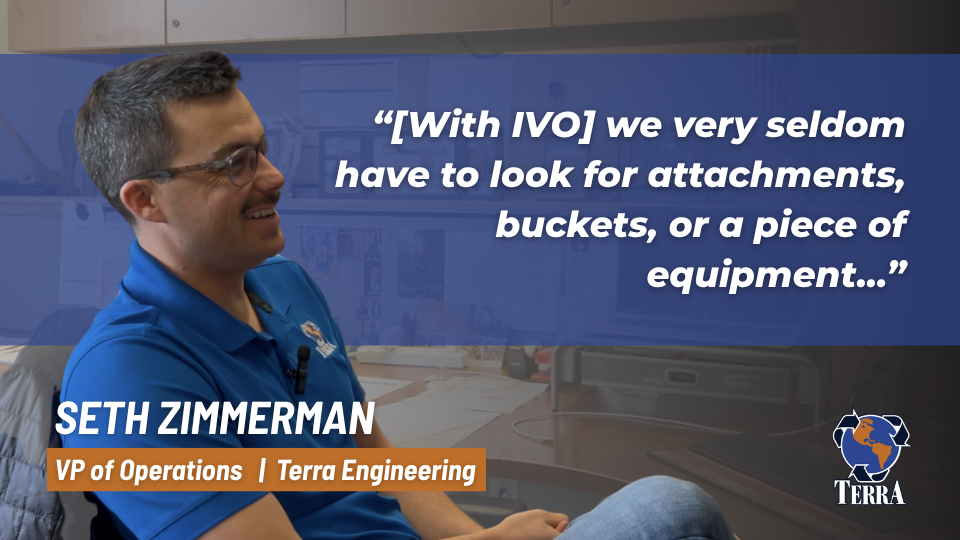
“We’re moving equipment around efficiently,” Zimmerman said. “We very seldom have to look for attachments, buckets, or a piece of equipment.”
That is an important distinction. Terra is still serious about equipment visibility. The company has built a process, supported by IVO, that gives people access to location and maintenance information while keeping daily updates simple enough for the team to maintain.
For Terra, scheduled equipment moves through DispatchVO keep TrackVO accurate day to day. When a move is assigned, the driver receives a dispatch ticket with the equipment, location, and timing details needed to complete it. Once the move is marked complete, the equipment location updates in TrackVO across the company. The move still follows a defined process, but the location change is tied to completed work instead of relying entirely on automatic feeds or separate manual updates for every asset.
If a piece of equipment comes back to the yard unexpectedly, Zimmerman said Terra’s shop managers do a good job updating the system as well. In TrackVO, that can be handled manually by a simple "point and click" move on the online magnet board.
Staying ahead of maintenance reduced the pressure for telematics
One of the strongest reasons Terra does not feel pressure to expand telematics use is that the team has already made major improvements in maintenance tracking.
Before IVO, Terra’s maintenance process relied heavily on paper cards that could lead to delays. A repair card, maintenance card, or service card had to be filled out in the field, make its way back to the right person, get reviewed, and then be entered or acted on before the shop had a current picture of what needed attention.
EqInspectVO changed that process by giving field employees a faster way to submit equipment information. Terra’s employees can complete inspection forms directly from the ScheduleVO interactive text message they receive on their phones each day. When a submission comes in with action required, people assigned as Watchers get a text or email notification, helping the shop see problems sooner and keep repairs moving.
That matters because maintenance visibility only helps if the information reaches the right people in time to act on it. Today, the shop and office can see upcoming maintenance sooner, review repair needs as they are submitted, and decide whether work should happen on site, in the shop, or after a machine is swapped out.
“We are staying so far ahead of all of our maintenance now,” Zimmerman said. “We’re on a proactive maintenance program, and we aren’t reactive.”
For Terra, that outcome carries more value than adding data the team does not currently need. Hour meter and odometer readings still need to stay current, but those updates can be captured through the same inspection forms field employees are already completing each day. The maintenance program is ahead of where it used to be, and the company is not losing time searching for equipment, buckets, or other supporting assets.
That reduces the urgency to add another layer of telematics across an older fleet.
A practical view of construction technology
Zimmerman’s view of telematics is measured. He does not rule it out completely, and he recognizes that newer machines are increasingly coming with telematics already installed. The decision comes down to whether the data solves a problem Terra currently has.
The ability to manage equipment manually today while keeping the option to bring telematics into the same system later was one of the reasons Terra chose IVO Systems.
“I know some people can get kind of wrapped up in all the technology progression and all that, but it’s just not something that is broken that we feel like we need to fix,” Zimmerman said.
That is a useful way for contractors to think about any technology decision. A system can collect more information, but the value depends on whether that information improves the decisions the team needs to make. For some contractors, telematics may be essential. For others - like Terra - the more immediate need may be a simple but robust, shared system for tracking location, assignments, maintenance, repairs, and equipment availability.
Terra’s experience shows that manual tracking can still be a strong fit when the process is consistent and the information is visible to the people who need it.
The right level of tracking for the operation
Every contractor has a different fleet, asset mix, and operating style. A company with a newer fleet, a large geographic footprint, or a strong need for automated hour and fault-code data may put telematics at the center of its equipment management process.
Terra’s situation is different. The company has some older equipment, a team that stays on top of keeping the system updated, and a clear process for managing location and maintenance information manually. That approach gives Zimmerman and his team the answers they need without requiring a major investment in telematics across every machine.
The same thinking applies to buckets, augers, tooling, pumps, hoses, trench boxes, and other supporting assets that move through the operation. Many of those items will never justify telematics hardware, but they still need to be visible. A contractor still needs to know where they are, what job they are assigned to, and whether they are ready to use.
A simple electronic equipment board can give the team one place to see the assets that affect the work, whether those assets are connected to telematics or updated manually.
The broader lesson for mixed fleets
Terra’s approach points to a larger reality for contractors managing mixed fleets. Some companies have newer machines with telematics, older machines without it, rented equipment, attachments, tooling, and supporting assets that all need to be managed together.
Those assets do not all need the same tracking method. Some may justify automatic data. Others only need a current location, assignment, status, or maintenance note. The important part is keeping them in the same equipment picture so the team is not managing connected machines in one place and everything else somewhere else.
For contractors with mixed fleets, the strongest system is one that can use telematics where it adds value while still making manual updates simple when that is the better fit. That flexibility keeps the equipment board useful without forcing every asset into the same technology model.
Technology needs to solve a real problem
Terra’s decision not to rely heavily on telematics is a practical choice based on the company’s fleet, process, and current needs.
The team needed better visibility into equipment location, maintenance needs, inspection issues, and day-to-day movement. IVO Systems gave Terra a way to manage that information in one place, keep the shop and office aligned, and stay ahead of maintenance without outfitting every machine with telematics.
For Terra, the value comes from having the right information available when decisions need to be made.
For more perspective from Zimmerman and others on the Terra team, watch the full case study interviews on how Terra Engineering & Construction uses IVO Systems to manage equipment tracking, maintenance, scheduling, and field operations.