There are a lot of good reasons contractors look at telematics. It can give you a clearer picture of what is happening across the fleet without relying on someone to manually report every move or meter reading, and it can also surface patterns in utilization, idle time, fuel use, and equipment health that are hard to spot when you are managing everything through day-to-day observation.
That can be extremely useful, especially when you are running a large fleet, moving equipment between several projects, or doing production work where a small improvement in how machines are being used can add up to real money over time. At the same time, putting telematics across an entire fleet can become a major investment once you factor in devices, installation, subscriptions, integrations, and the time it takes for someone inside the company to actually review the data and do something with it.
So the question is not really whether telematics is useful. It is where telematics is useful enough to justify the cost, and whether you are trying to solve a problem that actually requires that level of data.
A telematics-agnostic perspective
IVO Systems is telematics-agnostic, which means we do not manufacture or sell tracking devices, and we are not building our recommendations around getting more hardware installed across a contractor’s fleet.
That is an important distinction because platforms that sell both the software and tracking hardware have an incentive to put more devices across the fleet. Their recommendations may still be valid, but contractors should keep that in mind and make sure the conversation starts with the operational problem, not the hardware.
Our approach is different - we work with what you've got. A contractor can manage equipment manually in IVO Systems, bring in data from telematics providers with an open API, or use a combination of both methods in the same system. You can have a connected excavator, a manually updated skid steer, a rental, an attachment, and an older machine with no tracker at all, and still keep everything visible in one place.
That gives contractors the ability to use telematics where it makes sense without making it the starting point for every equipment decision. There are times when telematics is absolutely worth it, and there are other times when a daily inspection, a reliable equipment-move process, or a shared online equipment board already gives the company what it needs.
The goal is not to collect as much data as possible, just for the sake of having data. The goal is to have accurate enough information to make better decisions and keep jobs moving.
With that in mind, here are five of the most important questions I would ask before deciding how much telematics your fleet actually needs.
1. What problem are you actually trying to solve?
This is where I would always start.
A lot of companies say they need better fleet visibility, but that can mean several different things. Maybe they do not know where equipment is. Maybe hour meters are always out of date. Maybe maintenance is being missed. Maybe they want better utilization data. Maybe they are concerned about fuel burn, idle time, safety, or how often equipment is sitting when it could be working somewhere else.
Those are all valid problems, but they do not all require the same solution. If your biggest issue is that nobody knows where equipment is, then you may need better location tracking. If your biggest issue is that preventive maintenance is being missed because hour meters are inaccurate, then you need a better way to collect meter readings. If you are running double shifts in a quarry and trying to understand production, fuel use, and idle time across the fleet, then you probably do need much more detailed telematics data.
You have to get specific before you start looking at devices, because once you know what decision you are trying to improve, it becomes much easier to figure out what data you actually need and which assets need to provide it.
2. Can your inspections already give you the basics?
A lot of contractors already expect operators to complete equipment inspections every day, and if that inspection includes the machine’s location and current hour-meter reading, then you may already be collecting the two pieces of information you were planning to get through telematics.
That does not mean telematics would add no value. Automatic readings can save time, reduce manual entry, and give you more frequent updates, while fault codes, fuel levels, utilization data, and other machine details can help with maintenance and operational decisions. The real question is whether those additional details solve a problem that is worth paying for.
If you mainly need current meter readings so preventive maintenance stays on schedule, a consistent inspection process may already be enough. If you are trying to compare idle time across a large production fleet or identify small changes in fuel burn across multiple shifts, manual inspections are not going to give you that level of detail.
This is why I would look at how reliable your current process is before assuming you need more technology. If operators are completing inspections, the readings are accurate, and the information is getting to the right people, then you may already have what you need. If inspections are inconsistent, meter readings are regularly outdated, or equipment locations cannot be trusted, then the first question is whether the process needs to be fixed or whether automation would solve the problem more reliably.
3. What kind of work is the equipment doing?
Telematics data only means something when you understand the work behind it.
Take an excavator on a jack-and-bore project. It may dig for part of the day, then spend several hours lifting materials or functioning more like a crane while the crew handles the rest of the work. A telematics report may show high idle time, but that does not automatically mean the excavator is being used poorly. That may be exactly what the job requires.
Now compare that with a contractor stripping pits, moving large volumes of material, working in quarries, or running production equipment across multiple shifts. In that type of operation, machines are often doing repeatable work, and small differences in cycle times, idle percentages, fuel use, or operating hours can have a major impact when those differences are repeated across several machines and several shifts.
That is where detailed utilization data from telematics can really earn its place. The data becomes valuable when it is tied to a measurable process, someone is responsible for reviewing it, and the company can use the findings to improve production or reduce cost.
Without that context, an idle-time percentage or utilization report can create a lot of noise without telling you whether there is actually a problem.
4. Which assets are actually causing the problem?
A lot of contractors start the telematics conversation by thinking about their biggest and most expensive machines, but those machines may be the easiest ones to keep track of. A large excavator or dozer may sit on the same project for several weeks, so even without telematics, most people know where it is.
The equipment that causes more trouble is often the smaller stuff that moves constantly. Skid steers, compact equipment, attachments, pumps, trench boxes, light plants, trailers, and other supporting assets may bounce between projects, yards, crews, and service locations, and those are the items that can disappear from the company’s view quickly.
That does not mean every small asset needs a tracker either. In some cases, selective GPS or Bluetooth tracking on the equipment that moves the most may solve the problem. In other cases, a simple process that requires someone to update the asset’s location when it moves may be enough.
The point is to figure out where the breakdown is actually happening before you start installing devices. Our article for Modern Contractor Solutions, “Streamlined Tracking for Practical Visibility", goes deeper into this idea. A practical equipment-tracking strategy often ends up being a mix of automatic data for the machines that justify it and manual tracking for attachments, rentals, older equipment, and everything else that still needs to remain visible.
You may find that the assets creating the biggest headache are not the ones you assumed would need telematics first.
5. Is anyone going to use the data?
This is one of the biggest questions, and it is easy to overlook.
Telematics can produce a huge amount of information, but the data itself does not improve anything. Someone still has to review it, understand what it means, decide whether action is needed, and then follow through. That could mean changing a preventive maintenance schedule, looking into excessive idle time, investigating unusual fuel use, moving an underutilized machine, correcting unsafe driving behavior, or deciding whether equipment should be rented, reassigned, purchased, or sold.
Before you add telematics, you should know who is going to look at the information, how often they are going to review it, and what decisions they are expected to make with it. If nobody has the time or authority to act on the data, then you may end up paying for a lot of information that gets attention during the first few weeks and then slowly becomes one more screen nobody checks.
That is especially common in smaller companies or lean equipment departments where the same person may already be managing maintenance, coordinating rentals, moving equipment, handling breakdowns, and answering calls from the field. More information can help, but it can also create more work.
Telematics tends to create the most value when it supports a process that already exists or gives someone information they are ready to use. Data for the sake of data is usually where the return starts to fall apart.
A mixed approach may make the most sense
You do not have to choose between putting telematics on everything and using no telematics at all. For a lot of contractors, the better answer is a mixed approach where automatic data is used on the machines that clearly justify it, while other equipment continues to be managed manually.
That is especially practical for mixed fleets because most contractors are dealing with some combination of newer connected machines, older equipment, rentals, attachments, non-powered assets, and equipment from several different manufacturers.
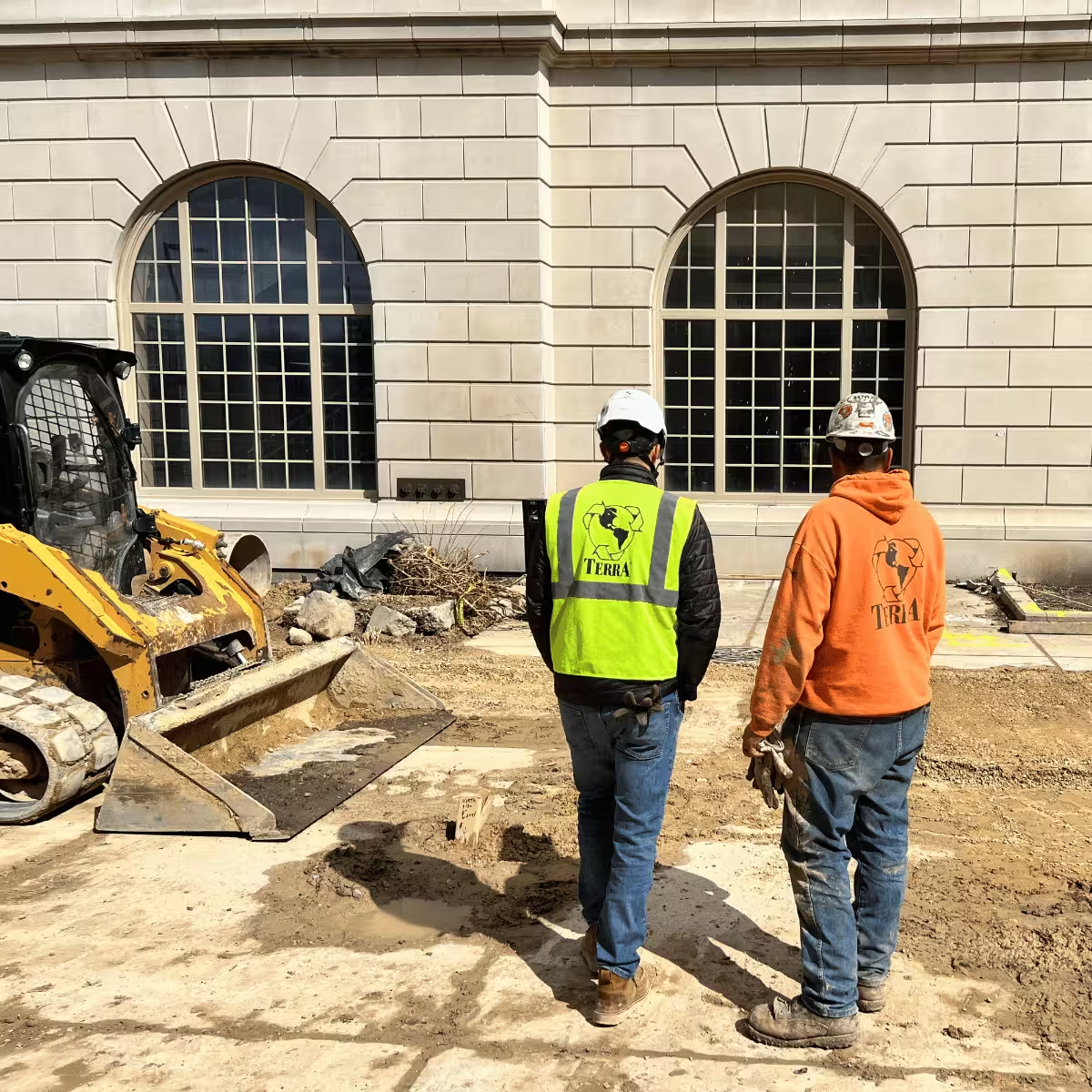
Terra Engineering & Construction Corporation manages its fleet this way with IVO Systems. Terra keeps equipment locations, maintenance information, inspections, and day-to-day movements organized without relying heavily on telematics across the fleet. Some of its machines already have telematics, and the company can bring more data into IVO Systems later if its needs change. Right now, though, Terra has been able to solve the problems that matter most without making a major hardware investment across every asset.
As Seth Zimmerman, VP of Operations at Terra Engineering explained, “I know some people can get kind of wrapped up in all the technology progression and all that, but it’s just not something that is broken that we feel like we need to fix.”
That is really the point. Terra is not against telematics. The company is using technology where it makes sense today and keeping the flexibility to add more automatic data later if the operation changes.
You can read more about why Terra does not rely heavily on telematics data and how the team keeps equipment and maintenance information current in IVO Systems.
Figure out where telematics actually earns its place
There are plenty of situations where telematics can make a real difference, whether that means giving maintenance teams more dependable meter readings and earlier visibility into fault codes, helping people locate equipment faster, or giving production-focused operations enough utilization data to identify waste and improve how machines are being used.
None of that means every asset needs a device.
I would start by looking at the problem you are trying to solve, the information your team already collects, and the places where the current process keeps breaking down. From there, look at the type of work each machine performs, which assets are actually difficult to manage, and whether someone inside the company is ready to use the information telematics would provide.
Then use the simplest reliable solution that solves the problem. That may be telematics on certain machines. It may be a daily inspection, a manual location update, or a shared equipment management system for other assets. The best setup is the one that gives your team all the information it needs efficiently - without paying for data that nobody is going to use.
To learn more about how IVO Systems can help your team keep equipment locations, maintenance information, telematics data, and day-to-day decisions organized in one place, schedule a demo with our team.